A greenhouse can shelter vegetables from the rain, but it cannot protect a grower from a poor market, high operating costs or technology that does not suit the climate. For Professor Isaac Aiyelaagbe, these practical realities have been part of a much longer effort to make greenhouse cultivation work in Nigeria. His journey has taken him from horticultural research to university teaching and, more recently, to helping convene a national conversation about what it will take for the industry to grow.
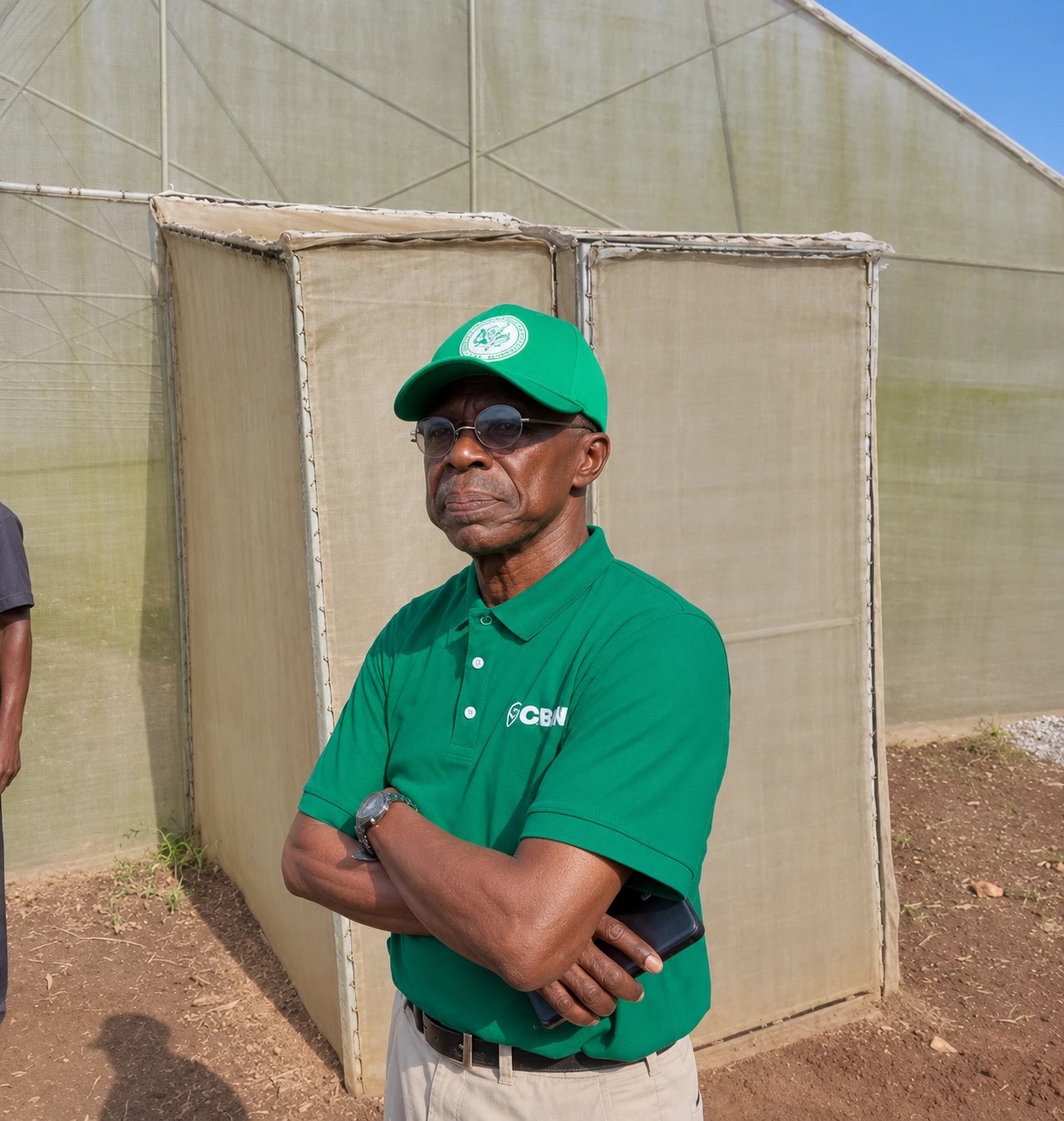
Aiyelaagbe’s work in horticulture includes time at the National Horticultural Research Institute (NIHORT), followed by university research and teaching. In reflecting on this journey, he is quick to point out that greenhouse cultivation is not new to Nigeria. He recalled greenhouse facilities at Moor Plantation in Ibadan and Samaru during the colonial period, examples that place today’s enthusiasm for the technology within a much longer history of agricultural experimentation. His later experience of greenhouse cultivation in Germany offered another view of what protected production could achieve. Back in Nigeria, however, the conditions were different. Designs and production practices developed elsewhere could not simply be transferred to a hotter, more humid environment. The question was how to make the technology relevant to the people and places expected to use it.
That question followed him into the classroom. The interview Keselash Agricom had with him touched on discussions about greenhouse cultivation in university teaching around 2009, and later efforts to build it into training. The work required more than adding a topic to a course: students needed practical knowledge, lecturers needed the capacity to teach it, and growers needed support that extended beyond academic instruction. As interest developed, Aiyelaagbe saw the need to connect what researchers were studying with what farmers and commercial operators were experiencing.
Greenhouses should complement open-field farming, not replace it.
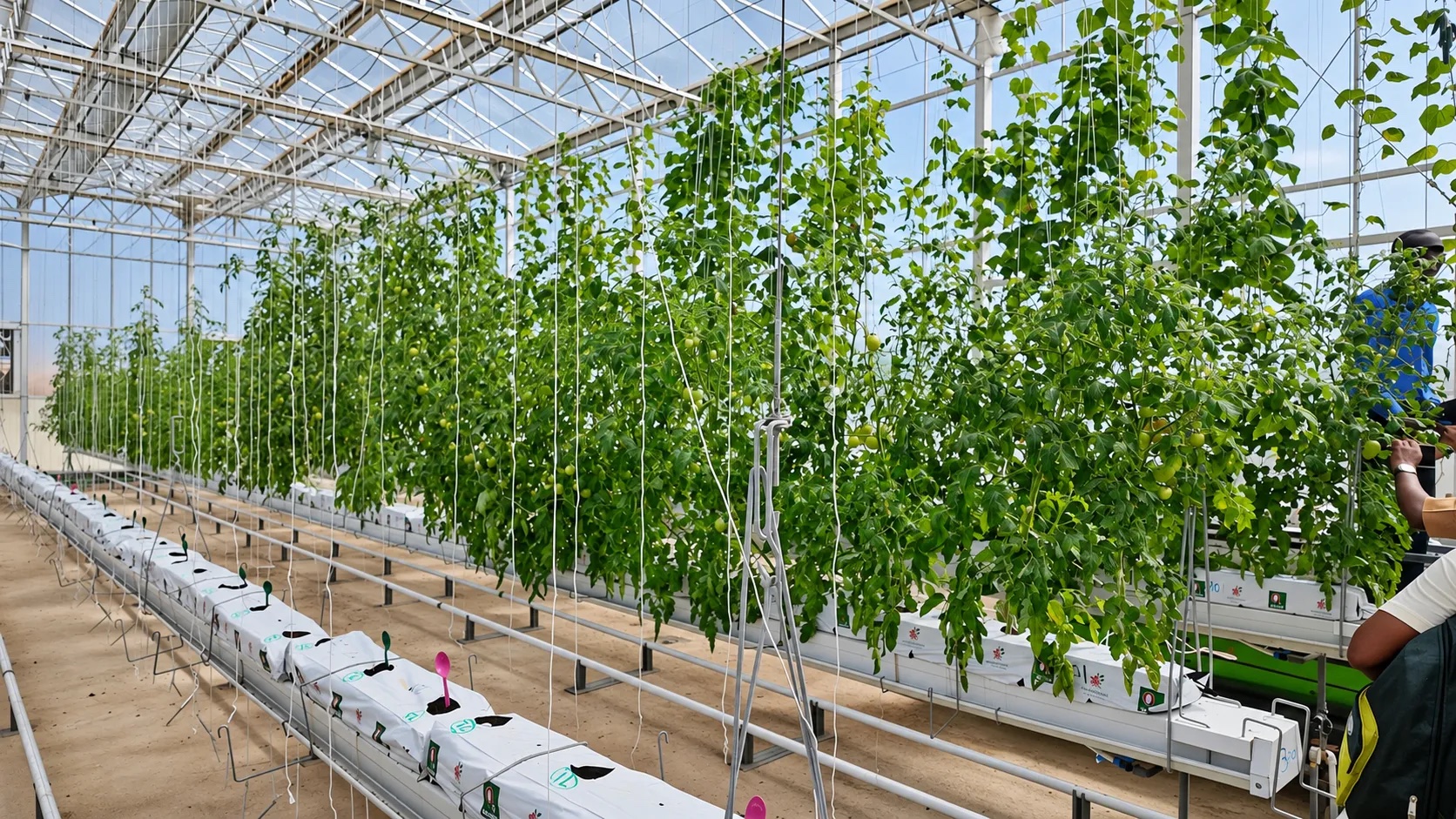
Aiyelaagbe does not see greenhouse cultivation as a replacement for open-field farming. He believes the two should complement each other, with greenhouses offering opportunities to produce crops throughout the year and manage growing conditions with greater precision. That advantage matters when seasonal weather makes production unpredictable, but it depends on getting the technology and management right. Insufficient ventilation or unsuitable materials can make a greenhouse difficult to operate under local conditions. Even when crops grow well, the business can falter. Farmers face the cost of structures, inputs and skilled labour, then have to find buyers before perishable produce loses value. His reflections return repeatedly to this commercial reality: more reliable production is valuable only if growers can recover their investment and sustain their operations.
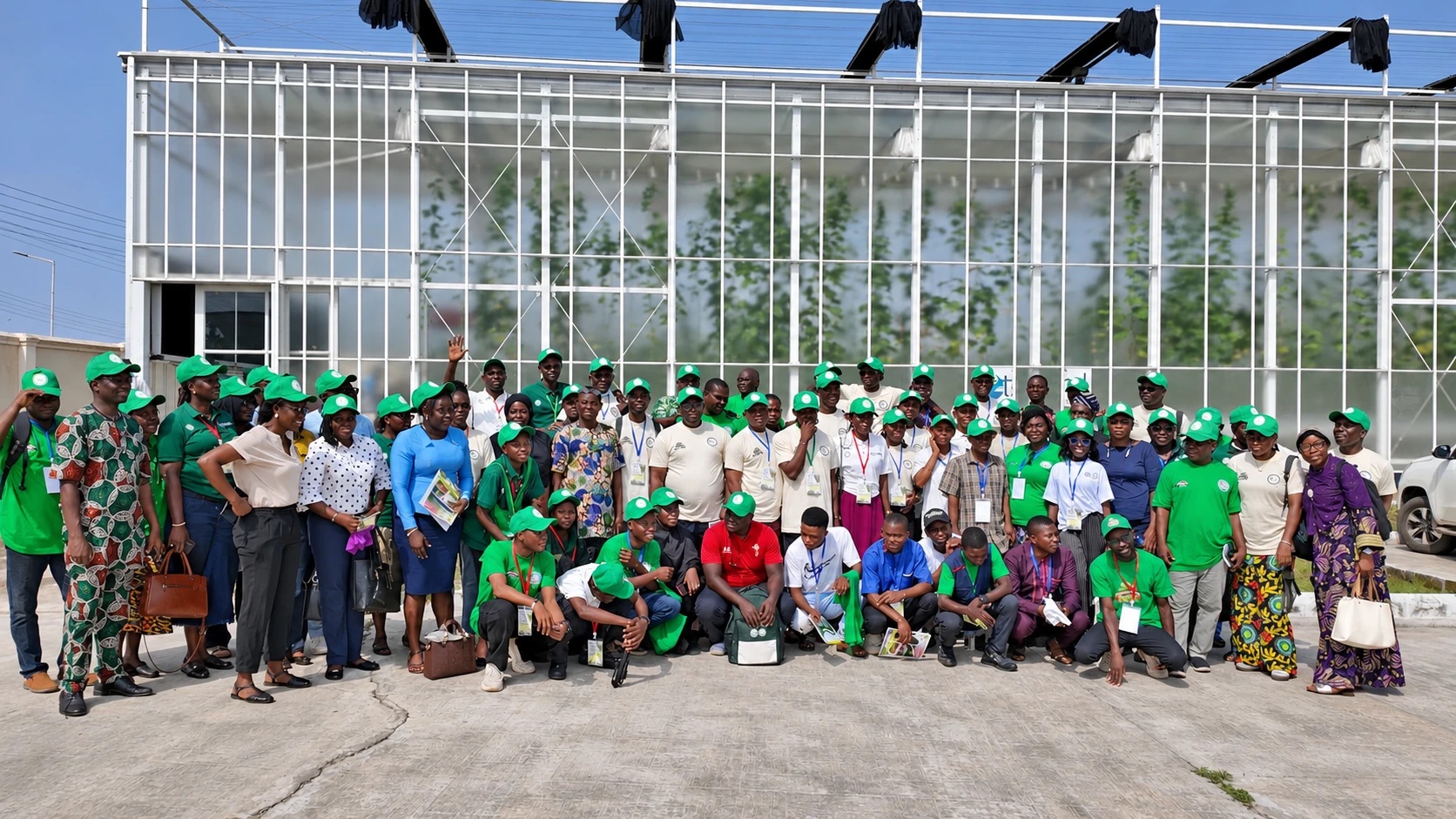
These concerns gradually became the basis for a wider conversation. According to him, “the discussion to host this conversation about a national symposium can be traced to 2022.” In October 2026, the First National Symposium on Greenhouse Cultivation was held at the Federal University of Agriculture, Abeokuta (FUNAAB). For Aiyelaagbe, the gathering brought together strands of work that had often developed separately: research, training, greenhouse design, production, input supply, finance and the business of getting crops to market.
The significance of bringing these groups into one room lay in the different questions they could ask of each other. Researchers could explain what they were learning about production systems, while growers and suppliers could test those ideas against the cost of equipment, the availability of skills and the demands of customers. Discussions about finance, markets and locally suitable technology made clear that no single institution could build the industry on its own. The symposium offered a meeting point, not a finished solution.
Aiyelaagbe’s story is therefore about more than an agricultural structure. From the early greenhouse facilities he recalls to today's renewed industry conversations, it traces the continuing effort to make an established idea work better in Nigeria. Greenhouses can extend production beyond seasonal limits and bring greater precision to crop management, but their value lies in complementing open-field agriculture, not displacing it. After years spent across research and education, the challenge he has helped bring into focus is whether Nigeria can build the skills, technologies, partnerships and markets that allow growers to keep producing long after the structures are installed.