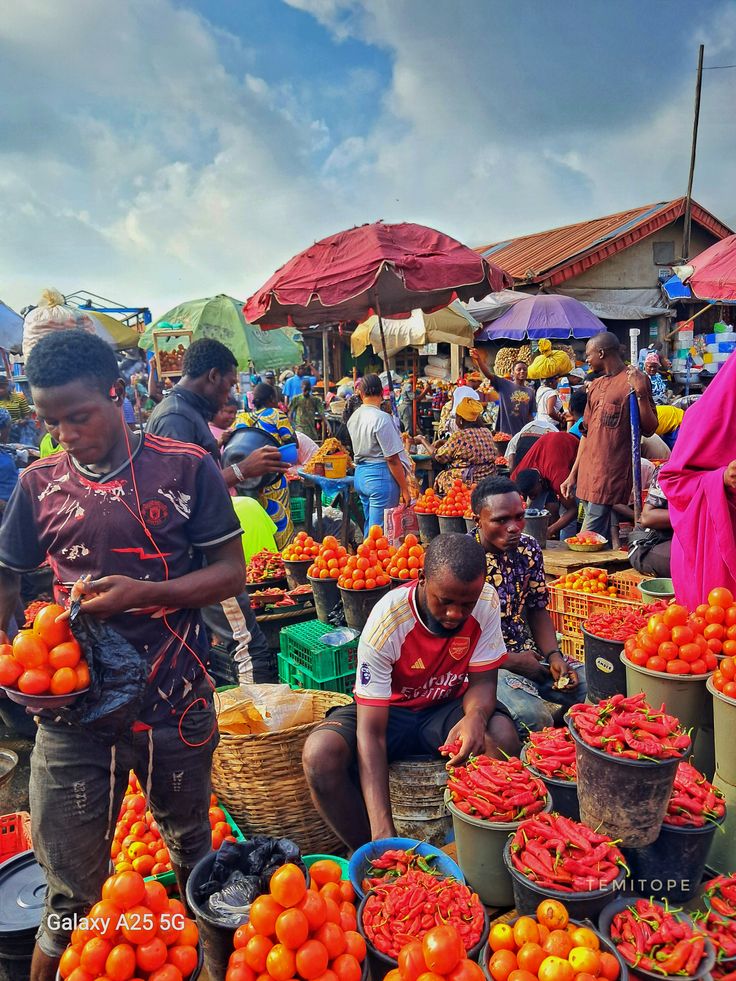
For Mrs. Lucas, a mother of three living in Abuja, going to the market has become an increasingly frustrating experience. She often leaves home with what she considers a substantial amount of money, only to return with far fewer food items than she expected. Sometimes, the difference between what she spends and what she brings home is so difficult to reconcile that she feels as though she has misplaced some of the money she took along. Yet, she has spent it all on food. Her experience reflects the difficult reality confronting many Nigerian households, where the availability of food in markets does not necessarily mean families can afford what they need.
Her experience comes against a troubling national backdrop. According to the Cadre Harmonisé food security analysis reported by the Food and Agriculture Organization of the United Nations (FAO), an estimated 36.3 million Nigerians were projected to face crisis-level or worse acute food insecurity during the June to August 2026 lean season, compared with approximately 30.6 million during the corresponding period in 2025. The figures underscore the scale of food insecurity in a country where conflict, economic pressures and disruptions to livelihoods continue to affect access to sufficient food.
The findings give added urgency to conversations surrounding World Food Day, commemorated on October 16, 2026, under the theme “Innovate Today. Nourish Tomorrow.” The observance highlighted the importance of building resilient food systems and improving access to nutritious food. In Nigeria, it also brought renewed attention to a persistent concern: why does food remain difficult to afford despite agricultural programmes, investments and interventions intended to improve production and food security?
Why food remains expensive
Understanding this challenge requires looking beyond the prices displayed in markets to the costs and inefficiencies that accumulate before food reaches consumers. In an interview with Oluwatosin Ogunsola, Co-founder and Director, Policy and Strategy of Food System Watch (FSW- https://foodsystemwatch.com), food affordability emerged as a problem extending beyond agricultural production to include rising input costs, inadequate storage and processing infrastructure, transportation challenges, access to finance, insecurity, climate change and the purchasing power of households.
For farmers, the cost of food begins long before harvest. Seeds, fertilisers, machinery, and crop-protection products require considerable investment, while imported agricultural inputs and raw materials are particularly vulnerable to foreign exchange fluctuations. Farmers must recover these expenses while earning enough to sustain production, even as consumers struggle with the final price of food. This creates a difficult balance between making food affordable and ensuring that those producing it can maintain viable livelihoods.
The challenges continue after harvest, particularly for perishable produce such as tomatoes, fruits and vegetables. Ogunsola identified inadequate processing capacity and limited cold-storage infrastructure as factors affecting farmers' ability to preserve their harvests. Without suitable facilities, farmers may be forced to sell produce immediately, sometimes at unfavourable prices, or risk losing part of it to spoilage. Transportation introduces further expenses, particularly where poor roads, high fuel costs, vehicle maintenance and insecurity make moving food from producing communities to urban markets difficult.
Consider the journey of a basket of tomatoes from a farming community in Kaduna to a market in Abuja. The price a farmer receives at harvest may be considerably lower than what consumers eventually pay, but the difference does not necessarily represent profit for traders. Between the farm and the market, transportation charges, loading costs, indiscriminate road taxes and the risk of spoilage can increase the cost of getting the produce to consumers. Where storage facilities are inadequate, traders may also lose part of the tomatoes before selling them, leaving fewer marketable goods from which to recover their expenses. This illustrative journey reveals how food can become more expensive as it moves through the supply chain, even when neither the farmer nor the trader necessarily earns a substantial profit.
When interventions miss the supply chain
Climate-related disruptions and insecurity further complicate food production and distribution. Unpredictable rainfall, flooding and drought can affect yields and increase production risks, while insecurity in farming communities can restrict access to farmland and disrupt agricultural activities. These pressures affect not only farmers' livelihoods but also the reliability of food supply, making it more difficult for agricultural businesses and markets to operate predictably.
These interconnected challenges raise questions about why agricultural interventions have not consistently translated into more affordable food. Programmes that focus primarily on improving productivity may increase harvests without addressing the costs of preserving, processing and transporting produce. A farmer who receives improved seeds or fertiliser may achieve a higher yield, but if storage facilities remain inadequate and distribution costs are high, the benefits may not reach consumers in the form of lower prices.
Access to finance presents another constraint. According to Ogunsola, many smallholder farmers and agricultural businesses struggle to access suitable funding because of limited financial records, formal lending requirements and the risks associated with agricultural production. Without adequate capital, investments in improved farming practices, storage facilities and processing equipment become difficult, allowing inefficiencies to persist across the food value chain.
Affordability is also about household income
Beyond production and distribution challenges, affordability is also closely tied to household income. Even where food is available and prices are relatively stable, families may struggle to purchase nutritious diets if their earnings cannot keep pace with the cost of living. Food competes with transportation, housing, healthcare and education, forcing households to make difficult choices about the quantity and variety of food they consume. This distinction is important because improving food availability does not automatically guarantee adequate nutrition.
Connecting the food system
Ogunsola's reflections also point to the need for a better understanding of how different actors across the food system influence one another. The price consumers encounter at the market is shaped by decisions, costs and risks that may not be immediately visible. For farmers, the concern may be recovering production costs; for traders, preserving and transporting food without excessive losses; and for consumers, purchasing enough nutritious food within the limits of their incomes. These experiences are interconnected, yet they are often considered separately in discussions about food affordability.
For Mrs. Lucas, these broader challenges are reflected in what she brings home after each market visit. While policymakers and development organisations discuss food production, agricultural investment and food security, her immediate concern remains how much food her money can buy for her family. Her experience illustrates the distance that can exist between agricultural progress and the realities of household consumption, raising questions about whether existing interventions adequately address the factors that keep nutritious food beyond the reach of many Nigerians.
Understanding these underlying causes is essential to making sense of Nigeria's food affordability challenge. However, identifying where the food system falls short is only the beginning. The more consequential question is what must change across production, processing, distribution, agricultural finance and household access to ensure that improvements in the food system translate into more affordable meals.
In Part Two of this series, we examine potential pathways towards making food more affordable, including how innovation and the work of organisations such as Food System Watch could help address these challenges.