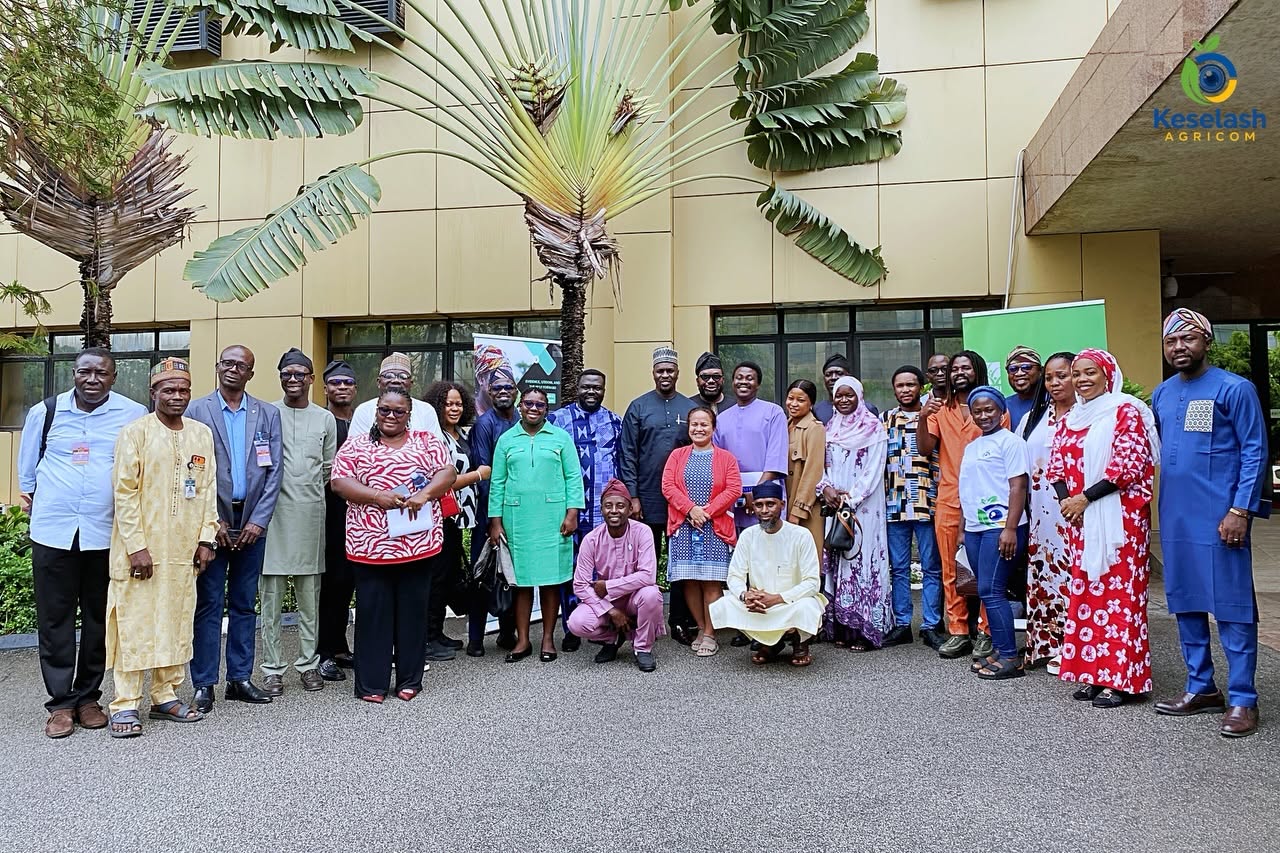
That question was at the centre of a recent policy dialogue on "Digital Agricultural Advisory Platforms in Nigeria," held in Abuja on 27 August 2026.
The gathering brought together researchers, agritech companies, government actors and development organisations to examine what digital advisory services are already achieving, what continues to hold them back and what it will take to reach more farmers sustainably.
Technology can extend the reach of agricultural knowledge
For farmers facing changing weather patterns, rising production costs, insecurity and limited access to extension services, timely information can make a significant difference.
Catherine Ragasa of the International Food Policy Research Institute (IFPRI) highlighted one of the strongest opportunities presented by digital agriculture: scale.
"Digital tools and AI can facilitate things and they have the ability to reach a lot of farmers. We're talking about millions of farmers."
Catherine Ragasa · IFPRI
Digital platforms can complement conventional extension systems by reaching farmers who may rarely have direct access to an extension agent. But Ragasa also stressed an important point: technology is only a tool.
Reaching millions of farmers means little if the information reaching them is inaccurate, difficult to use or disconnected from their realities.
Start with the farmer, not the technology
The need for a human-centred approach also came through strongly in the contribution from Babafemi Adewumi of Crop2Cash.
For many smallholder farmers, awareness and affordability remain major barriers to adopting digital services. Farmers need to understand how a tool can improve what they already do — and see enough value in it to justify the cost.
But that begins much earlier than adoption. It begins with listening.
Adewumi explained that Crop2Cash engages directly with farming communities to understand their challenges before developing solutions.
"Building a product that farmers do not need is a waste of energy and time."
Babafemi Adewumi · Crop2Cash
It is a simple idea, but an important one: solutions designed for farmers should also be shaped with farmers.
Scaling requires collaboration
The discussion also showed that digital agriculture cannot be built by technology companies alone.
Government has a role in creating supportive policies and stronger agricultural systems. Researchers can generate evidence on what works. Agritech companies can develop and test solutions. Development organisations can support knowledge, capacity and inclusion. And farmers must remain central to how those solutions are designed and improved.
As Ragasa noted, greater impact comes when these actors stop working in isolation and begin playing complementary roles.
This is particularly important as attention shifts from whether digital advisory services can work to how proven approaches can be expanded without losing relevance, affordability or accessibility.
Dr. Oliver Kirui of IFPRI captured this challenge succinctly:
"Digital extension works, it is not that it doesn't work. But how does it work and how do we scale it?"
Dr. Oliver Kirui · IFPRI
The bigger opportunity
For Keselash Agricom, the conversation points to something bigger than digital technology.
Food-system transformation is not only about developing more platforms. It is also about the impact of these platforms in strengthening the connections between evidence, people, knowledge and action.
Farmers need access to information, but they also need to see themselves and their realities reflected in the solutions created for them. Researchers need pathways for evidence to move beyond reports. Innovators need feedback from the people they hope to serve. Policymakers need clearer connections between what is happening in communities and the decisions being made at system level.
This is where communication becomes part of the infrastructure of change.
As Nigeria continues to explore the possibilities of digital agriculture, success should not be measured simply by the number of platforms created or users registered. The more meaningful question is whether these tools are helping farmers make better decisions, improve productivity, strengthen incomes and become more resilient.
Technology may expand the reach. But people, partnerships and relevant knowledge will determine the impact.
At Keselash Agricom, we believe stories shape systems. By connecting evidence with the voices and experiences of the people within Africa's food systems, we help make impact visible and knowledge useful — because transformation becomes possible when the right stories reach the right people.